
By Anastasiia Shevchenko
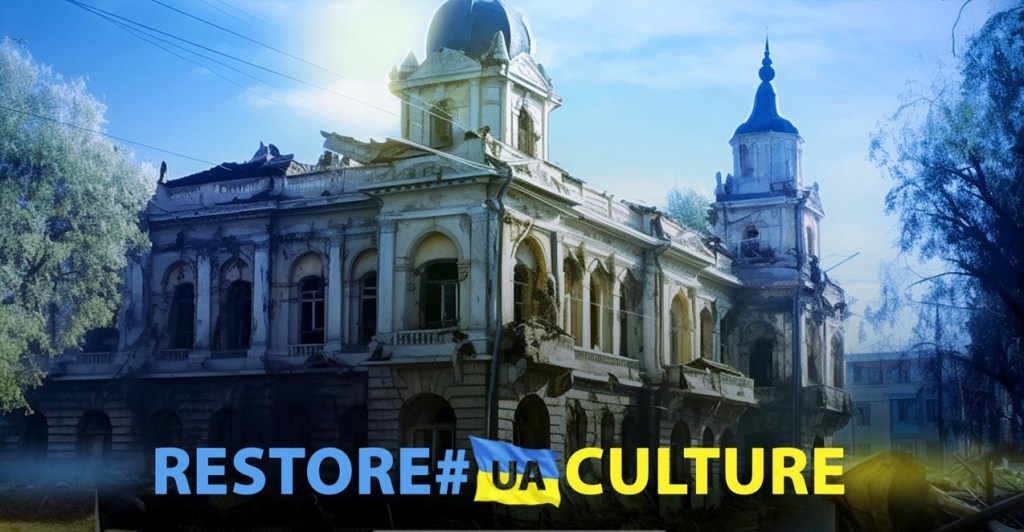
The destruction and looting of cultural values from the territory of Ukraine, which has begun in 2014, is now shocking by its scale. The targeted destroying of library buildings, cultural centres, historical monuments and educational institutions is aimed at erasing Ukrainian history and culture. However, the most cynical thing in this situation is the plundering of museums and archives under the “umbrella” of evacuation and preservation. The actions of the Russian Federation obviously violate international law. We talked to Nataliia Hendel, Professor of International Law at the Geneva Academy of International Humanitarian Law and Human Rights, about this and what can be done now to return our cultural values.

Nataliia Hendel, Professor of International Law at the Geneva Academy
of International Humanitarian Law and Human Rights
Nataliia Hendel: The issue of protecting cultural values is very important, because exactly cultural heritage and cultural values define a nation, define the history of the people. And they are most at risk of destruction in the context of armed conflict. Unfortunately, Ukraine has been experiencing this since 2014, because we have to understand that crimes against cultural property have been and are being committed in the occupied Crimea and in the occupied Donetsk and Luhansk oblasts, and it is clear that the number of these violations has increased after the full-scale invasion.


Anastasiia Shevchenko: If we are talking about the protection of cultural property, we need to understand the basics, where to look for this protection and what regulates this protection?
Nataliia Hendel: It is regulated by international law. The system of international law has a special branch called International Humanitarian Law. This is the law that starts to operate when an armed conflict begins. That is, relatively speaking, when the first shot is fired (in the case of an international armed conflict) between different states. This simple definition was given by the International Criminal Tribunal for the former Yugoslavia. Accordingly, since February 2014, Ukraine has been in an armed conflict caused by the aggression of the Russian Federation.
As for protection: in International Law, the rules are contained in two main sources: customary rules of International Humanitarian Law and treaty rules. Accordingly, both Ukraine and the Russian Federation have ratified most of the norms, namely treaty norms, which are dedicated to the protection of a particular category or limitation of certain methods and means of waging war. As for where exactly the protection of cultural values is established, this is the First Additional Protocol to the Geneva Conventions, which protects victims of international armed conflict; this is the special Hague Convention for the Protection of Cultural Property in Time of Armed Conflict (1954) and its additional protocols. Accordingly, we can distinguish two main obligations that create these norms: respect and protection of cultural values. Protection includes many actions that parties of the conflict must take. Firstly, we can distinguish two situations that are related to cultural values:
1. damage caused to cultural values during active hostilities (attacks, destruction of cultural property), i.e. these are deliberate attacks on cultural values, resulting in its complete destruction or damage;
2. cultural values can be destroyed or partially destroyed during so-called indiscriminate attacks, when weapons are used with a very large radius of destruction and, accordingly, damage is caused to objects located, depending on the type of weapon, within a certain radius.
International humanitarian law requires the protection of cultural values from direct attacks. This means that the parties of the conflict must clearly recognise that the object in question is a cultural value. In addition, it is important that there are no military objectives in the vicinity of the object or in the object itself, as this could make the cultural property a legitimate military target.
For example, the Skovoroda Museum suffered from such actions, and here we need to understand the qualification of whether this is a war crime, we need to understand that there was no military in the area, that it was a civilian object, and there was no military target. That is, it was a deliberate direct attack, and the armed forces of the Russian Federation knew that there was a museum on that territory. Therefore, this is a clear violation during active hostilities. This example gives an understanding of the principles that are taken into account when qualifying a crime.
Anastasiia Shevchenko: How should the looting of museums, archives and other cultural institutions in the occupied territory be qualified?
Nataliia Hendel: Regarding the occupation. When our cultural values are under occupation, they can be destroyed or plundered (looted). Accordingly, all of these actions are a violation, because the occupying power must protect cultural values, and it is the occupying power’s responsibility to ensure that cultural values are preserved. This is because the territory is occupied, which means that it is fully under the control of the occupying power. Therefore, the obligations towards the occupying power are contained in the Hague Convention on the “Laws and Customs of War on Land” (1907) in the provisions that supplement this convention. I would like to draw your attention to the fact that Ukraine has confirmed its legalsuccession to this Convention, and that it is legally binding for Ukraine, given that the Russian Empire acceded to this Convention at one time. Why is this convention important for us? It is important for qualifications, and accordingly, it contains the obligations of the occupier. That is why the looting of cultural values is a war crime, which is qualified under Ukrainian law, Article no. 438 of the Criminal Code of Ukraine, it is a blanket article, it refers to all the international treaties that Ukraine has ratified in the field of international humanitarian law.
Anastasiia Shevchenko: Let’s look at the specific case of the Kherson Regional Art Museum named after Oleksii Shovkunenko, which was robbed “under the umbrella” of evacuation. 90% of the collection was taken to the Crimea. What should be done?
| For an interview with Alina Dotsenko, Director of the Kherson Regional Art Museum, please follow the link |
Nataliia Hendel: Firstly, we need a clear understanding and a clear register of cultural values – repository books, registration forms, what exactly was in a particular museum at the beginning of the occupation to establish the damage that was stolen – this is the starting point for future return. If we do not know about the list of cultural values, if it is not documented, it complicates the process of return, identification, and determination of where it is.
What steps are needed:
Opening proceedings at the national level. This is because the occupied territory remains the territory of the sovereign state of Ukraine, and this sovereignty extends to the occupied territory. This means opening proceedings under Article no. 438 of the Criminal Code of Ukraine “Violation of the laws and customs of war”, which is the equivalent of war crimes. If it is established that Ukrainian cultural values are located on the territory of a third state, i.e. if it is not the Russian Federation, but another state, then, accordingly, Ukraine may apply to this state using the mechanisms of the Ministry of Justice of Ukraine or the Ministry of Foreign Affairs of Ukraine, stating that this cultural value or exhibit was illegally moved from the territory of Ukraine by looting a museum, either public or private. Why is this appeal necessary? Because if the national level provides for liability for war crimes, and the theft of cultural heritage is one of them, then this appeal makes it possible to open criminal proceedings in a third country using the principles of universal jurisdiction.
We must understand that during active hostilities, during the active phase of an armed conflict, the parties of the conflict very rarely return cultural values. Almost never. A classic example is the World War II. The return of cultural values took place after the end of the war and happened much later.
Anastasiia Shevchenko: But is it possible?
Nataliia Hendel: In theory, it is possible, because of the international legal basis – the relevant conventions. However, this is possible only if the aggressor state is willing to do so, because it has obligations. But we are witnessing how the Russian Federation disregards the rules and violates the norms of international law, and the entire international community is trying to stop it by using sanctions mechanisms, etc. The effectiveness of International Law depends on the extent to which the state parties of a particular International Treaty implement it.
A good example is the return of Scythian gold. Ukraine took advantage of the fact that it was outside the Russian Federation and outside the occupied Crimea, on the territory of a third state. And that is why Ukraine initiated the use of legal means, judicial means to, firstly, argue that it is a cultural value of Ukraine, even though it was in the occupied territory of the Crimea. This was confirmed by the annual adoption of a UN resolution, starting in 2014, recognising the territorial integrity of Ukraine. It is precisely because of this connection, that these cultural values are Ukrainian cultural values, that it was decided through a lengthy court case that the Scythian gold should be returned to Ukraine. Such litigation can take place in third countries where cultural property is located. There may be two processes:
1. A legal process, namely a lawsuit with the Netherlands.
2. Negotiations. During the negotiations, the state needs to prove that the cultural values belong to it through the relevant registers, repository books, and registration forms, because without this evidence, the process of return is complicated. When Ukraine is able to prove that the cultural value is Ukrainian, it is necessary for the third state to make a decision on the return of the cultural value on its own, through diplomatic means. Sometimes intermediaries can act in such processes. Also, a specialised UN organisation, UNESCO, plays an important role in the return of cultural values in times of war. Within UNESCO, there is a special committee that deals specifically with the return of cultural objects. The main mechanism of this committee is to participate as an intermediary in negotiations between states on the return.
However, these mechanisms are only effective if the cultural value is located on the territory of a third state. If it is on the territory of the Russian Federation, it is much more complicated. It is necessary to negotiate: first of all, the armed conflict needs to be ended so that there is a decision on the return of the cultural value, recorded in a relevant treaty or resolution of an international organisation, which will oblige the Russian Federation to return the cultural value or compensate for the damage done to the value as a result of damage or destruction (this is the payment of reparations).
Anastasiia Shevchenko: You mentioned that the occupying state assumes responsibility for the preservation of cultural heritage in the occupied territories. The occupation authorities cynically speculate on this norm, hiding the looting of museum collections under the “evacuation”.
Nataliia Hendel:
I would like to draw your attention to the fact that when we talk about the preservation of cultural values, we mean their preservation in the country of origin of this cultural value.
I would like to draw your attention to the fact that when we talk about the preservation of cultural values, we mean their preservation in the country of origin of this cultural value. That means they should transfer these cultural values to Ukraine, and Ukraine, fulfilling its obligations, should move them to the safest location, further from the frontline. This is the first option, and it takes priority. Additionally, cultural values can also be transferred to a third country for safekeeping. If the Russian Federation fulfils its obligation to preserve cultural assets, it should evacuate them and hand them over to a third country for safekeeping. After the armed conflict ends, the third country should return the cultural values to the state of origin, Ukraine, in the same condition as they were received. If we are talking about fulfilling obligations, because otherwise, it is an obvious manipulation. Currently, the Russian Federation has become more active in using such interpretations to justify its crimes. In this case, it is a violation, and accordingly, Ukraine should reach an agreement with a third country that will take on the responsibility of preserving and protecting Ukrainian cultural assets during the armed conflict and then returning them. However, the Russian Federation will not take such actions, because we all know the purpose behind all these removals of Ukrainian collections.
In reality, I believe this is part of a larger plan, a broader policy… of cultural genocide – this is the desire to destroy Ukrainian: Ukrainian books, museums, and Ukrainian intangible cultural heritage, which is insufficiently protected by the International Law.
In reality, I believe this is part of a larger plan, a broader policy, as it is being written about and discussed, and, by the way, Raphael Lemkin, when formulating his concept of genocide, included the concept of cultural genocide. It was not reflected in the 1948 Genocide Convention, but in the systematic actions of the Russian Federation’s policy – and the recent attack on the printing house in Kharkiv also demonstrates this desire to destroy Ukrainian culture, Ukrainian books, museums, and Ukrainian intangible cultural heritage, which is insufficiently protected by International Law.
Anastasiia Shevchenko: If we return to the case of the Kherson Art Museum, the first step they are currently taking is to restore the documentation to prove that these paintings are theirs. What are the next steps specifically on the International stage? Where should they turn to, in which courts, and who should do it?
Nataliia Hendel: There is an ongoing investigation under Article no. 438 of the Criminal Code of Ukraine, “War Crimes,” and there is a unit within the Office of the Prosecutor General that handles this. But it’s not just about opening a case – it’s about identifying who committed these crimes, who removed these paintings. Without suspects, we will not get any court decisions.
First, we need to establish who we are holding criminally responsible. The Russian Federation can only be held accountable for violations of International Law, and there is a limited number of institutions where this can be done (International Court of Justice).
Second, if we consider the International Criminal Court (hereinafter – ICC), it’s again about individuals, about the criminals who committed the crime. It could be the International arbitration, but we need to determine who will be the object of responsibility. Currently, there are four arrest warrants issued by the ICC – for Putin himself, Lvova-Belova (the Russian Federation’s Commissioner for Children’s Rights) regarding the deportation of Ukrainian children, and two generals. So far, there are no cases in the ICC related to the destruction of cultural values, and in the entire history of the International Criminal Court, only one case has been related to cultural values. Much depends on the advocacy of Ukrainian human rights organisations, and on the cooperation between the museum and human rights organisations that document violations against cultural values. Human rights organisations can also file complaints or reports. A well-prepared report on the war crimes committed against the relevant museum is needed for the ICC. Besides Interpol, cooperation with UNESCO is essential, as they are primarily concerned with cultural values. However, we must not only talk about violations; there must also be evidence, specifically fully digitised registers that serve as the foundation for proving that these values were looted. This issue needs to be discussed at conferences, and there is a UNESCO committee that deals with the protection of cultural values during an armed conflict. The Council of Europe adopted the Nicosia Convention on the criminal aspects related to cultural values, and the Council of Europe platform should also be utilised. If we have evidence, we need to systematically leverage all available mechanisms, because until we have a suspect, we will not have a verdict. And there must be one!
The interview was recorded during the round table “Protection and Restitution of Cultural Property in Ukraine in the Conditions of the War” in Geneva, May 25, 2024.

 UA STUDIES IN SWITZERLAND