
MY PERSONAL WAR
The article presents an interview with Oleksandr Knyha, Director of the Kherson Music and Drama Theatre recorded in August 2024 in Kherson
By Anastasiia Shevchenko
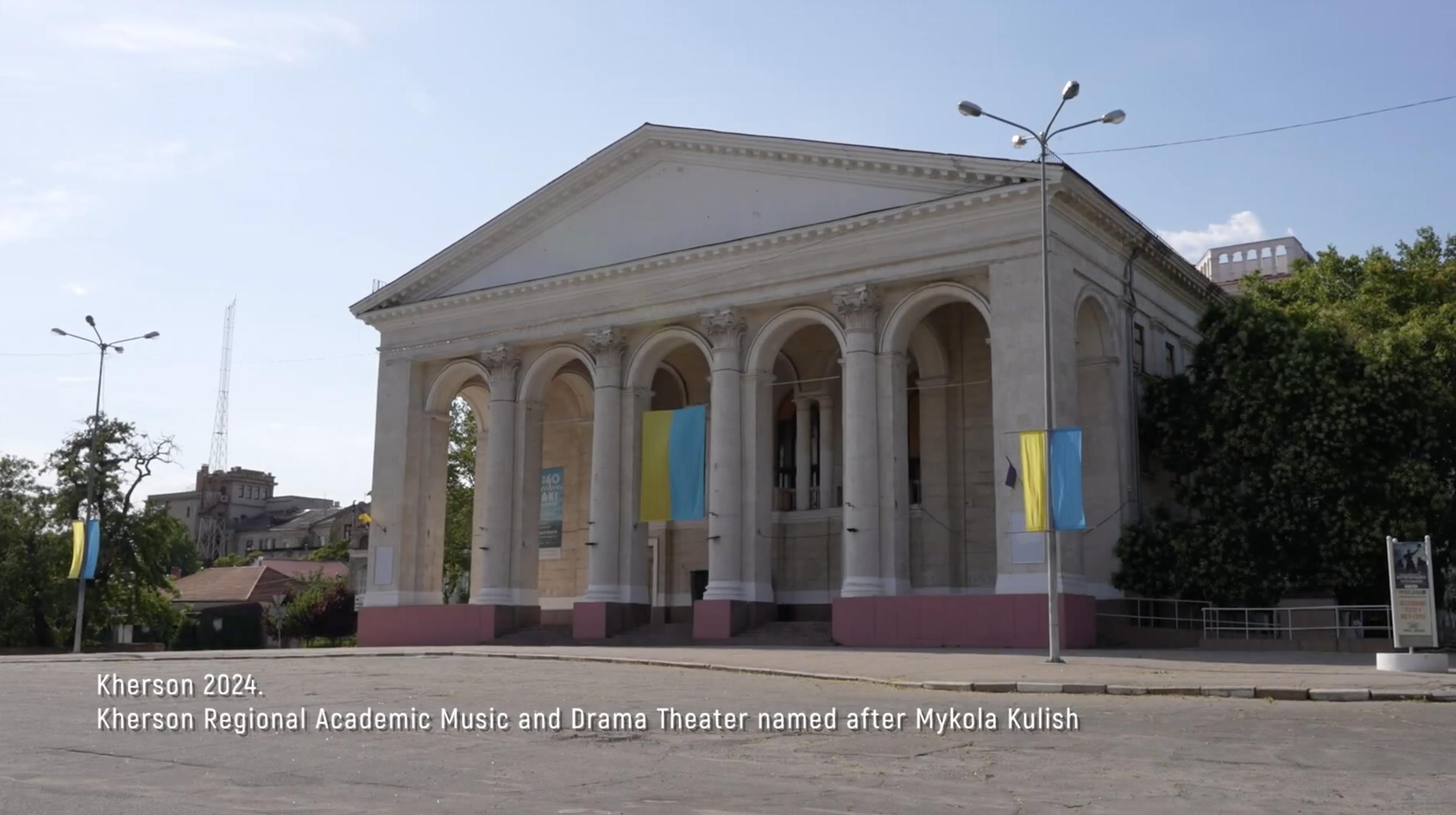
Summer 2024, Kherson: the first southern front line in the Russian war against Ukraine. At the entrance to the largest theatre in the region, we are met by the director – Oleksandr Knyha. Another shelling of the city has begun, and without losing optimism and time, we go to see the bomb shelter.
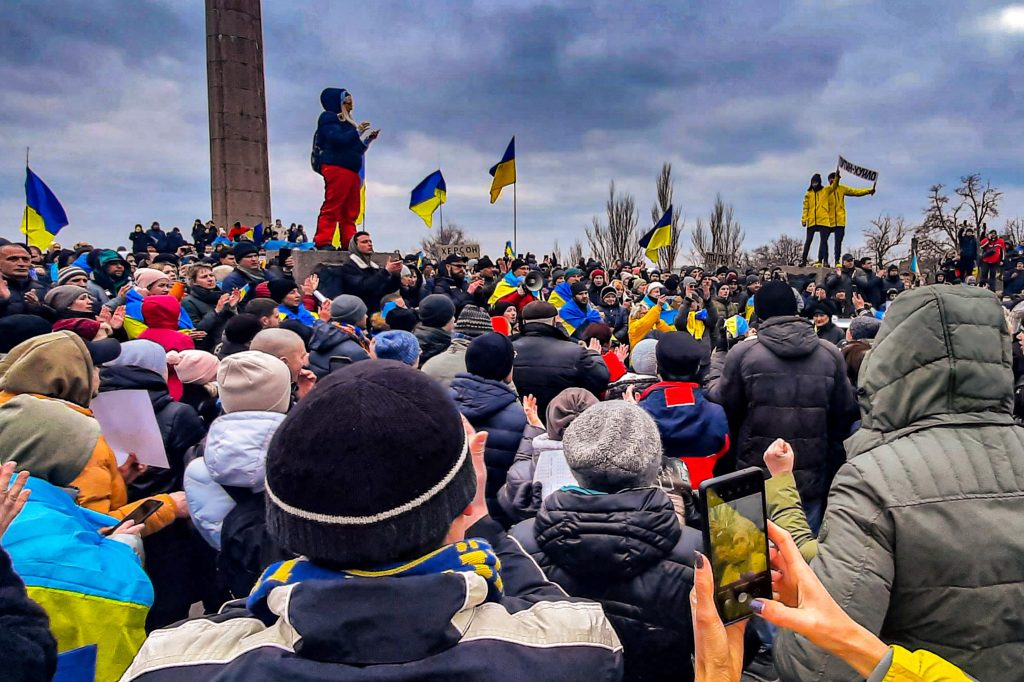
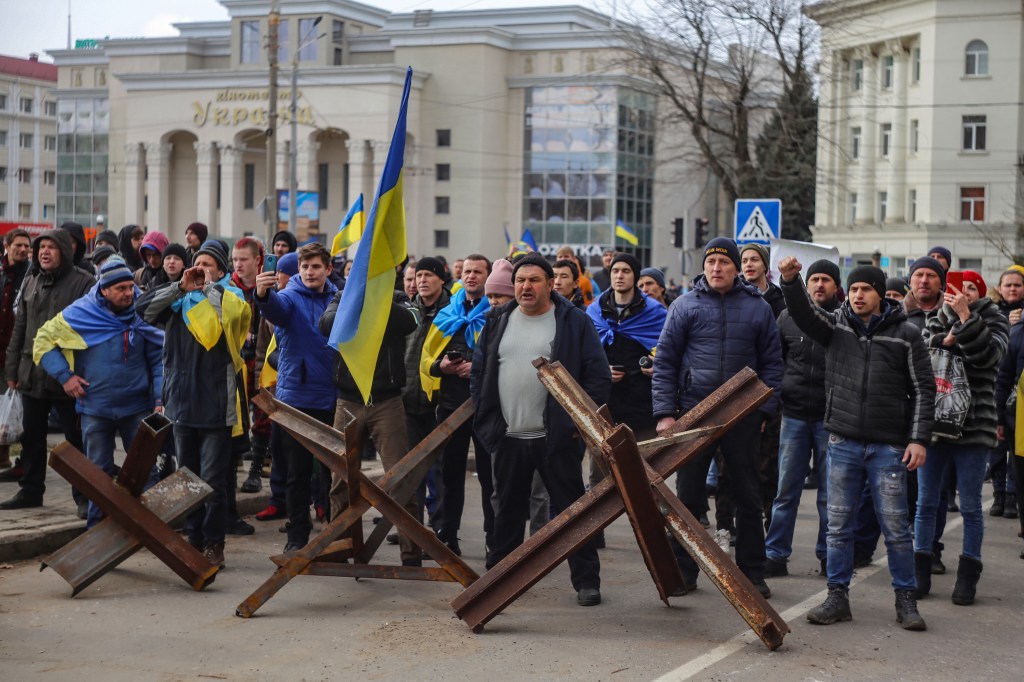
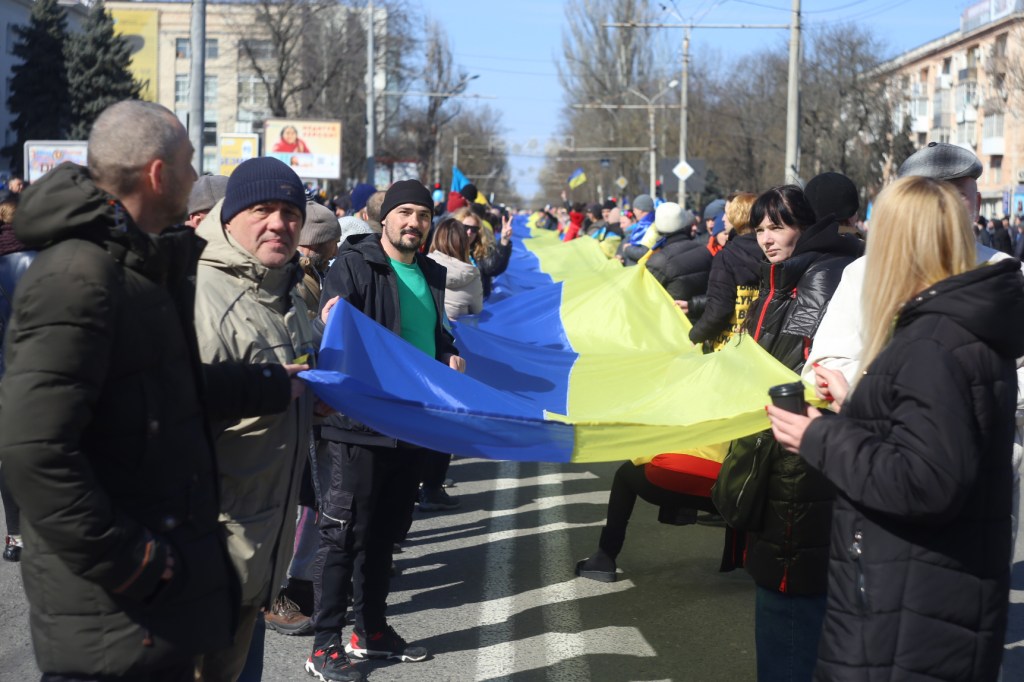
Every time I am surprised by the calmness and optimism of the people I interview, even during the shelling. However, when I start talking about the occupation, the optimism immediately disappears, – A.Shevchenko
Anastasiia Shevchenko: Kherson was occupied by Russian troops on 2 March. The city was under occupation for 8 months. Do you remember the first days of the occupation?
Oleksandr Knyha: If we talk about how long I was under occupation, it turned out to be nearly 40 days. It’s as if a soul departs after 40 days, and in my case, I was forced to flee from my native Kherson region after that time. On the first day of the war (I lived in Oleshky, not Kherson), when it began, my son called me. Naturally, where do you run in such a moment? You run to work. I thought about the theater and decided to go there. When I arrived, we opened a bomb shelter, which ended up housing 85 employees for a month during the occupation – by the time “they” (ed. russian soldiers) arrived – first at the theater and then at my home – to conduct a search, the reality of the situation sank in.
After this, I returned home because my wife called and said that the family had gathered to decide what to do. The fighting was already very close. As I was heading back to Oleshky, I came under fire near the Antonivskyi Bridge, which was being captured as paratroopers landed. The driver and I had to abandon the car. I called some friends who owned a boat, and they rescued us – me, the driver, my son’s girlfriend, and a friend from Oleshky who was also heading there. They took us safely to Oleshky, and that’s how, in just one day, we found ourselves trapped under occupation.
By the second day, there was nothing left in Oleshky. The bridge had been captured, no supplies were arriving, and everything in the shops had been looted. By the third day, everyone was already desperate for food. At home, we needed to feed three dogs – one of them quite large – but there was nothing available. We began searching for something, perhaps some grain at the bases that we could buy. To make matters worse, my mother-in-law urgently needed her medication, and she had only two pills left, enough for just the next two days. We drove around searching pharmacies, but all we saw were huge lines of people signing up, not even knowing if any supplies were available.
For instance, there was a line half a kilometer long in front of the ‘ATB’ store. We approached the crowd on the second day of the war and asked, “Do you know if there are any products?” People replied, “We don’t know. We’re just standing here, as if money is being exchanged”. It turned out that the store allowed cash withdrawals from cards, likely because it couldn’t transport the money out. By that point, everything had already shut down – the bridge was closed, and conditions were extremely harsh.
But amidst the chaos, the local self-governance began to step up. Even with no government, no police, no official authority, people took responsibility for organizing themselves. I remember Mayor Yevhen Ryschuk posting on Facebook about an opportunity they had discovered – they had found some flour and, if they could repair the pipe, they could begin baking bread.
It was on the 3rd or 4th day of the war. The bread was baked, and they decided to distribute it in the stores first – just one loaf per person.
On the first day the bread appeared, it sold out immediately. Then they decided to give it away for free, but, of course, someone had to supply the flour, and it came at a cost.
Later, they decided to sell the bread at a fixed price, still limiting it to just one loaf per person. We remembered that at our base, where our eldest son had been living, we had baked 2,000 pancakes on the first day of the war. He came to our house because the whole family had gathered together to prepare for the Shrovetide holiday.
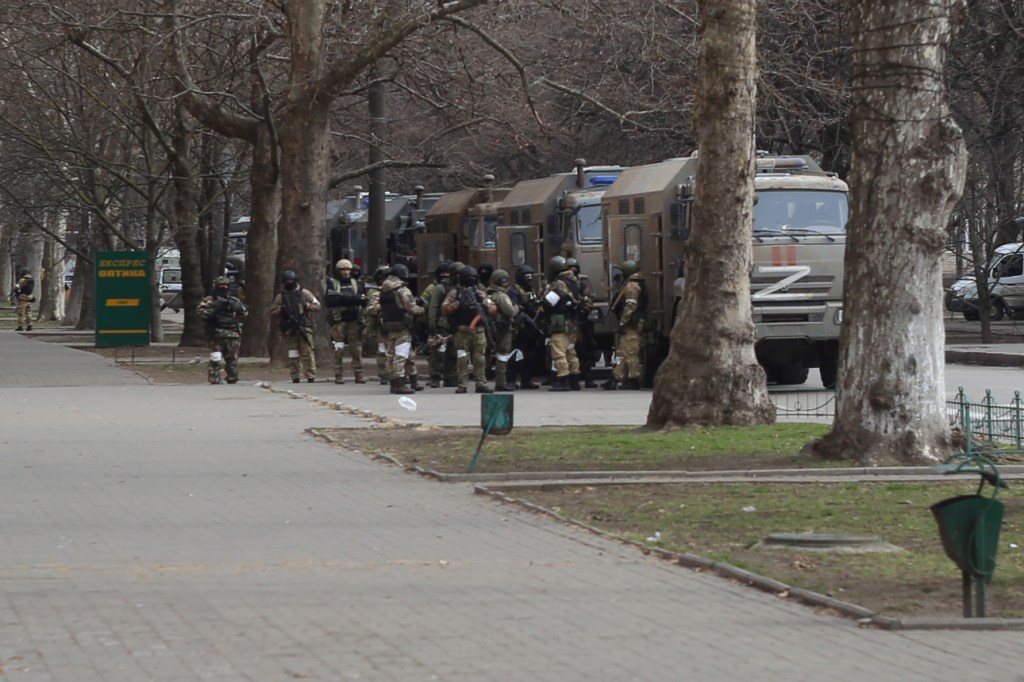
But how could we reach the forest? Just across this road – our Starooleshkivska – columns of military vehicles were passing through.
We took a risk and went with our youngest son. Thank God, we didn’t encounter any orcs that first day. We managed to sneak the kilometer to the forest, ran to the base, and took what we could find: sugar, flour, vegetable oil, and those pancakes.
Can you believe it? For several days, half the street – our neighbors – survived on those pancakes. It gave us the strength to keep going.
Later, we attempted to retrieve more supplies from the base, but that’s when we encountered our first military column.
It was terrifying. The car stopped, and we stopped.
A military convoy was passing by. We placed our hands on the car. At that time, all cars had white cloth covering their mirrors.
The first armored personnel carrier with a machine gun approached, and the gunner aimed at us as we stood there. Our hearts sank, but, thank God, they didn’t shoot.
The convoy passed, and the last vehicle also aimed its machine gun at us before driving away.
It was difficult to survive…
A month later, when we managed to escape, we reached Odesa. Our friends there had left us keys to their house – they had already fled to America. The driver who met us warned, “There’s no food left in the house. You’ll need to buy some.”
When we entered a grocery store in Odesa, it triggered something in us. Seeing the shelves stocked with food after all we’d been through – it was overwhelming. My daughter walked down the aisles, touching the chocolates and candies. After just one month of war, it felt like we’d been through a nightmare, like we’d survived a concentration camp.
It was terrifying. I wouldn’t wish such an experience on anyone…
“When we entered a grocery store in Odesa, it triggered something in us. Seeing the shelves stocked with food after all we’d been through – it was overwhelming. My daughter walked down the aisles, touching the chocolates and candies. After just one month of war, it felt like we’d been through a nightmare, like we’d survived a concentration camp. It was terrifying. I wouldn’t wish such an experience on anyone…” O. Knyha
Anastasiia Shevchenko: Let’s go back to Oleshky, how did you survive? Where did you look for food and medicine?
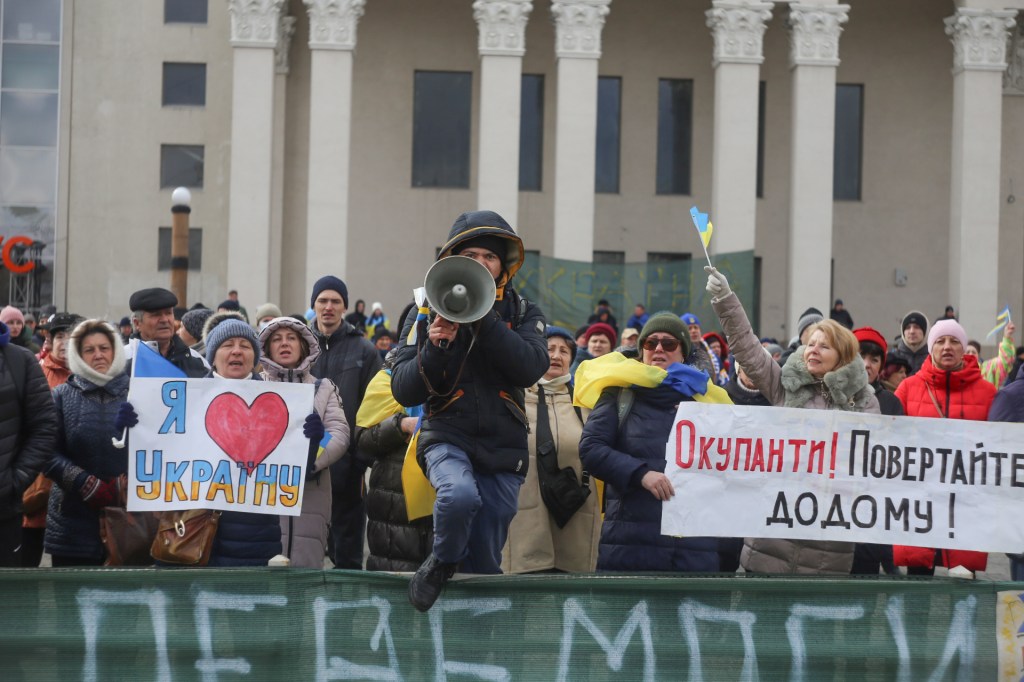
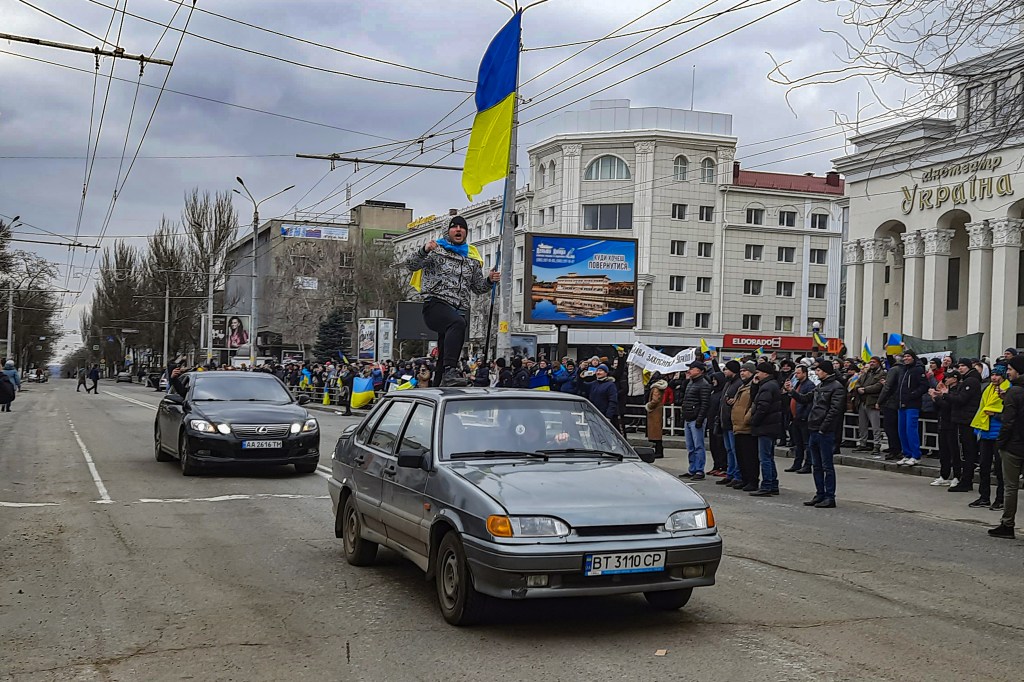
Oleksandr Knyha: That first month, we patrolled the city every night. The boys in the neighborhood gathered together to organize ourselves, solving everyday problems for both our families and the people who stayed behind in Oleshky. We also joined rallies. By early March, rallies had already started in Kherson, and a huge one took place in Oleshky on March 8. I was there, and my whole family participated – there were so many people. This continued for almost an entire month.
Anastasiia Shevchenko: Tell me how you were arrested by Russian soldiers? Do you remember that day?
Oleksandr Knyha: Оn March 23, the occupiers arrived at our house – a large group of them. Forty armed men showed up in three armored personnel carriers. I saw them with my own eyes, along with a dozen vehicles marked with the letter “Z.” Even the neighbor had a sniper stationed in an unfinished building nearby, watching to ensure that no one from a neighboring attic would throw a grenade.
I was accused of organizing the Kherson rallies as a regional council deputy and of allegedly paying money to demonstrators.
But as it turned out, I wasn’t even in Kherson during that time. From the first day of the war, when I was brought there, I stayed in Oleshky.
Yes, I had contact with people – we communicated regularly, and I knew that some were living in the theater. I tried to visit them multiple times. On March 8, I even bought a bouquet of tulips, which were very inexpensive in Oleshky at that time, and attempted to go to congratulate the women.
I wanted to bring them at least a small moment of joy amidst the ongoing war. But my team begged me not to go. They warned me, “You’re a deputy; they definitely have lists. They’ll stop you at the checkpoint first.”
I was torn and very nervous, but ultimately, I didn’t go. Instead, I returned to Oleshky, joined the Ukrainian demonstration, and gave the flowers to the women there. They smiled, and I felt incredibly fulfilled.
Later, when facing the Russians, I admitted, “Yes, I was at the Ukrainian demonstration.” They had photos of me – it was simply impossible to deny it.
Yes, I handed out flowers to women on March 8 to congratulate them – not money.
They searched for money in the house, even asking my wife if they needed to lift the parquet. They went through every room – my son’s, my mother-in-law’s, my daughter’s, and mine – trying to find something.
In the end, they found nothing valuable, but they left us with unpleasant surprises. After they left, my family started checking things. For instance, my grandmother’s wallet, which had 800 hryvnias, had been emptied. My son’s savings – a scholarship of 13 or 15 thousand hryvnias, which he had stored in his emergency backpack – were also gone.
This was outright robbery. They even took a few bottles from the liquor bar. It was blatant theft.
Later, I was taken to a pre-trial detention center in Kherson. The experience was terrifying. The number of armed soldiers involved in my detention felt absurd – as if I were some sort of intelligence agent or Agent 007. The detention center was in the Sklotara district (we have such a district).
Upon arriving, they spoke on a radio transmitter, pulled me out of the car, and suddenly Buryats jumped out of the gate – short-statured men wearing balaclavas, but you could still see it in their eyes. They shoved a foul-smelling cap over my eyes, which triggered me emotionally, as I am sensitive to such things. The cap smelled so bad it made me nauseous, though I hadn’t eaten or drunk anything that morning.
They dragged me upstairs with my arms bent. I thought they might throw me in a cell and start playing the “bad cop, good cop” routine. They put me in a cell and told me to remove my shoelaces and belt. I felt like I was part of a play, something you’d only see in movies.
The cell was empty, and I figured they would try to scare me. Then, a small window opened, and I saw a Buryat sitting with his legs up high. He called me over to the window and asked, “Who are you?”
I replied, “I’m the director of the theater.”
He said, “What’s wrong with you?”
I answered, “I don’t know.”
Then he added, “If you behave well, we’ll feed you.”
After that, they came into the chamber, opened the door, and dragged me upstairs again. They put me in a chair, and I could smell alcohol on them. I thought they were going to perform some “truth serum injections.”
One of them said, “We’re taking you for a drug test” They shoved something into my mouth, and I couldn’t see what was happening because the cap was still over my eyes. I could only feel their movements and noticed prints appearing on a small screen.
Then they took off my cap and took pictures of me – full face and in profile – part of their “prison procedure.”
Afterward, they asked, “Where are your documents?”, – I replied, “I don’t know where my papers are. I was arrested. How should I know?”
They put the cap back on me and led me to the cell again. I sat there for about 5–7 minutes before they came back, put the cap on me once more, and dragged me into another room.
This time, when they removed the cap, an FSB officer entered. I could tell he was from the FSB by his demeanor and uniform – distinctly different from the soldiers who had guarded me and searched my house.
And so, the interrogation began.
He had my briefcase and took out my phone, scrolling through it. I frantically tried to recall if I might have left any compromising information on it, or if I had missed deleting some correspondence.
There had been a lot of activity over the last month. As deputies, we conducted sessions, recorded interviews with the media, and shared information. Personally, I had traveled from Oleshky to Georgia multiple times for television appearances, and other countries had reached out to me as well.
We shared information – we documented where convoys were headed and described certain activities. This was what worried me most.
The interrogation felt like a game of ping-pong.
“We have information that you are the organizer of rallies”, – he accused.
“I am not an organizer of rallies”, – I responded firmly.
They showed me photos. “Yes, I was at the Ukrainian demonstration in Oleshky. I don’t deny it”, – I admitted.
Then they presented a photo of me registering at the Military Commissariat before the war. “Why were you at the Military Commissariat?”, – they asked.
“I signed up for the Territorial Defense”, – I said.
“And then what?” they pressed.
“They didn’t accept me – I was 63 at the time”, – I explained.
The conversation drifted to the theater. He asked me about various names. “Do you know who Pavlenko is?”, – he inquired. I thought for a moment -there was someone in Kyiv I knew by that name, but why would they care?
Then it hit me. He wasn’t asking about Pavlenko; he was asking about Pavlyuk. “Yes, Pavlyuk is our theater director”, – I said.
“That’s the organizer of the rallies”, – he declared.
“No, he isn’t”, – I clarified. “He’s just a well-known figure. Thousands of people have visited our theater – he’s a public figure. By some twist of fate, people recognize him, but that doesn’t make him an organizer”.
They had already detained Serhiy multiple times by then. They had confiscated his passport and tried to intimidate him but couldn’t figure out who truly held influence. By that time, his house had been robbed, and he had relocated with his family, hiding because he had five children to protect. It was an incredibly difficult situation.
The interrogation dragged on until nightfall. It was dark, and though the talking itself didn’t cause me pain, I was extremely uncomfortable.
I’ll admit it – I desperately needed to go to the toilet, but I was too ashamed to say so. I hadn’t eaten or drunk anything, and I didn’t want anything else – I just wanted to relieve myself, but I stayed silent. Eventually, I couldn’t hold it anymore. I knocked on the door. It was dark; they hadn’t turned on the light. I could hear voices outside.
“What do you need?”, – someone asked.
“I need to go to the toilet”, – I said.
“Sit!”, – came the curt reply.
At that moment, I thought, “That’s it. He won’t come back, and I’m going to embarrass myself here.”
Finally, when the officer returned, I blurted out, “I need to go to the toilet!”.
He called the guards and instructed them, “Take him”
I was taken to the toilet and thought to myself, “Well, thank God. Now I am ready to face whatever comes next.”
My detention had gained significant publicity because my children had written on social media that their father had been kidnapped. It quickly spread across networks. Since I collaborate with many theaters abroad, the news created a wave of reactions in Georgia, Turkey, Portugal, and of course, Ukraine. Friends everywhere rallied in support.
By the end of the day, during my interrogation with the FSB officer, as darkness fell, he asked me, “You have so many friends – do you have a place to spend the night in Kherson?”
I told him I would go to the theater. At that moment, I suspected they were trying to find out who I would visit and who my friends were, possibly to detain them too. It was impossible to understand their motives.
Then, they took me out of the pre-trial detention center, only to put me back in again – playing a game of confusion. Eventually, they led me out once more, shoved a hat on my head, and abandoned me in the middle of the city.
It was nearly curfew – only 40 minutes remained – and I realized they had left me far from the theater. There was no way I could make it in time. Thankfully, I was able to find the friends who had helped transport me to safety on the first day of the war. That’s how I ended up free again.
However, they didn’t leave me completely alone. They created a chat on a Telegram channel and contacted me just a day later. The resistance team in Kherson helped drive me back to Oleshky, but I soon received a call from the Telegram channel saying they wanted to speak with me again.
There’s an interesting anecdote about this period. After my release, I wrote a post saying, “Mom, I ate, and I’m without a hat,” referring to the absence of the hat they had forced over my eyes. This sparked a storm of reactions on social media. Friends congratulated me, and there was a flood of correspondence. But then I received a message on Facebook from a woman I knew: “Didn’t you get enough? Next time, we’ll lock you up for good.” That’s when I realized I was being monitored.
When the Telegram channel requested another meeting, I replied that it was difficult for me to get from Oleshky to Kherson without transportation. I told them I could come on Monday, as it was a Saturday.
They agreed. On Monday, I traveled back to Kherson. Three people arrived at the theater to meet me – two stayed in the waiting room while one came to my office. The conversation began with a representative of the Russian authorities who introduced himself as Serhii. He claimed to have been “fixing work” in Donetsk since 2014, emphasizing how much better everything was there.
As a regional council deputy, they tried to pressure me into cooperating. I refused, explaining that I had sworn an oath to serve the people of Kherson. Then they suggested, “Open a theater.”
I told them, “There are no people. Everyone has fled”
“Well, gather people and open a theater”, – they insisted.
The conversation dragged on, and eventually, I concluded, “The only thing I agree with from this discussion is that people need reassurance. The war has been going on for a month, and everything is difficult”
In the end, the man reiterated, “Gather people. Open the theater”
After he left, it became clear to me that they would not leave me alone. I had to find a way to escape to controlled territory.
Interestingly, they conducted a search at the theater on March 22. They forced everyone living there onto the floor, shouting that the building was rigged with mines. People were terrified and abandoned the theater. This fear was amplified by the bombing of Mariupol on March 16, as we had a project connected to Mariupol. By the time they left, there was no one left in the theater.
Anastasiia Shevchenko: How did you leave the city with a large family? There was no evacuation corridor, right?
Oleksandr Knyha: A few days later, I managed to make plans to escape. I spoke with Serhii Pavlyuk and our conductor, Artem Filenko. Together, we deliberated our options. Artem explained, “I can’t leave because my mother is sick. I’m a refugee from Luhansk, and I’ve already fled once. I won’t run again – I’ll stay in the city”.
Serhii added, “I’ll look for an opportunity”. Eventually, through friends, we obtained phone numbers of people who knew escape routes. They suggested I try to leave.
And so, on the first Saturday of April, my wife, my youngest daughter, and I began our journey to controlled territory.
We managed to pass through a dozen roadblocks. The most terrifying ones were the first checkpoints in and outside Kherson. I knew I had been detained before, and I feared they had lists with my name. I told my wife that if I were taken from the car, she should continue on without me. It would be easier to answer for myself alone.
Before this, we had agreed that my entire family – all five children – should evacuate from Oleshky. The Russians knew where I lived; they knew my house. With a big family, the risk was immense if someone were detained.
We divided ourselves across the city: my older son went to one group, my younger son to another, my wife and daughter to another, and I stayed elsewhere. Everyone settled in different locations.
Eventually, we managed to break free. It took almost nine or ten hours to travel the 20–30 kilometers to Snihurivka. But by two in the afternoon, we finally saw the first Ukrainian checkpoint.
Anastasiia Shevchenko: How did the theatre and the workers survive the occupation?
Oleksandr Knyha: Once in controlled territory, I tried to keep in touch with those still left behind. During the occupation, there were 70 theater workers in Kherson. In early April, there were movements to create a “Russian theater” in the occupied region. I received information that some employees were offered leadership roles in this new theater.
One of them was Danylo Sanitar, a vocalist hired just before the war. Initially, he appeared to be helping by bringing food to the people who lived in the theater. However, reports surfaced about him wearing new sneakers and sportswear – items stolen during the looting of stores. Eventually, he drove directly to the theater. As it turned out, this man had connections with the FSB, which led to Serhii Pavlyuk being compromised multiple times. Danylo even called me to say he was offered leadership of the theater.
I replied, “If you think you can manage the theater, lead it. But what kind of theater is this?”.
Later, I heard the theater’s security guard, Valerii Sheludko, had also been offered leadership, and he agreed. Valerii explained that a deputy named Serhii Cherevko, connected to Saldo, had told him: “Either you lead, or someone will be brought in from Crimea”. Valerii thought it would be better to keep things in his hands to at least preserve the theater.
In the end, only 14 of the 250 employees agreed to cooperate.
By April, the situation had become dire. While we were paid for March, April brought collapse. The Russians realized the finance department was working underground, so they raided offices, expelled workers, and destroyed keys and passwords. Salaries for educators, doctors, and theater staff couldn’t be paid. To provide some support, we used ticket sales funds in the theater’s accounts to help people still in Kherson. However, those who had fled empty-handed were struggling just as much. Amidst all this, the Russians tried to sway employees to cooperate by offering money, taking advantage of the dire conditions.
Anastasiia Shevchenko: It must have been impossible to work in such conditions?
Oleksandr Knyha: Around this time – June 10 – the International Theater Festival in Kherson, *Melpomena of Tavria*, was scheduled to begin. I decided the festival would go on, no matter what.
I gathered members of the organizing committee, many of whom were scattered across Ukraine and abroad, and told them, “We will make the festival happen.” The theater lent its support, and we proceeded. We created a new format where every theater could participate remotely. We couldn’t host it in Kherson, but even employees still in Kherson contributed to the festival.
For example, they recorded a touching video featuring viburnum while exposing themselves to danger. They shared it on social media from Lviv, and the clip garnered over a million views – it was incredibly moving. Watching it, I cried in the Opera House.
We brought together 65 theaters from 35 cities and 15 countries, including Japan and France. Everyone wanted to highlight the Kherson region, Ukraine, and the war. It became a form of cultural diplomacy under the slogan *Melpomena: the voice of the Kherson Region*. We aimed to send a message to those in Kherson who could access social media that the theater was still alive, and the world was standing with them – and we succeeded.
Realizing it wasn’t feasible to establish the theater in Lviv, I relocated to Kyiv with the support of the deputy corps. In August, at the National Theater named after Lesya Ukrainka, we revived the performance *Kitska in Memory of the Dark*. The Kherson Theater resumed operations in Kyiv as the Kherson Academic Music and Drama Theater named after Mykola Kulish.
At the same time, the original premises of the Kherson Theater were being plundered. Historical items, including Kulish’s archives, were damaged or covered with wreaths. When we returned, we discovered tickets for a comedy scheduled for November 29 – just before Kherson was liberated on November 11. That production never happened.
Workshops essential to the theater’s operations – locksmith, carpentry, shoemaking, and more – had been looted. We didn’t even have basic tools, like hammers and nails. Computer equipment was stolen, and hard drives were removed. All laptops were taken.
Rebuilding took around eight months, with support from USAID. They provided financial aid, enabling us to purchase machines, computers, laptops, and sound equipment. With this assistance, we resumed full operations, staging new performances and premieres. Last season alone, we presented 14 new premieres.
We worked with Mykolaiv theaters to utilize large stages and produced plays monthly. In Kherson, performances took place in shelters throughout the city. One-man shows and musical performances thrived, supported by our conductor, Artem Filenko, who assembled the orchestra during the occupation.
Anastasiia Shevchenko: So the theatre operates under daily shelling?
Oleksandr Knyha: Through all of this, the Kherson Theater remained resilient. We demonstrated that culture is truly the national security of the state. People who attended performances often expressed profound gratitude. One woman shared, “I wore a dress for the first time in two years to come to the theater.” Despite the constant shelling in Kherson, people sought solace in the theater.
For moments like these, we continue our work, determined to persevere.
 UA STUDIES IN SWITZERLAND